
The Manifest: The Complete Guide to Architect-Grade LLM Prompts --- ## Further Reading - [How to Write System Prompts for ChatGPT: The Ultimate Technical Guide](/blog/how-to-write-system-prompts-for-chatgpt) - [Structured Output Prompt Engineering: The Ultimate Guide](/blog/structured-output-prompt-engineering) - [Prompting as Code: Why System Architecture Beats ](/blog/prompting-as-code-system-architecture-beats-chatting)

- [Structured Output Prompt Engineering: The Ultimate Guide](/blog/structured-output-prompt-engineering)
- [Prompting as Code: Why System Architecture Beats ](/blog/prompting-as-code-system-architecture-beats-chatting)](/blog/four-pillars-architecture.svg)
Architect-grade LLM prompts use the STCO framework: System context, Task definition, Constraints, and Output format. This structured approach replaces ad-hoc chatting with version-controlled, testable prompt components that produce consistent, production-quality AI outputs across models. The Manifest provides the complete blueprint for building prompts that perform reliably at enterprise scale.
Welcome to the future of AI interaction. If you've ever felt frustrated by unpredictable, varying AI responses, the problem isn't the AI—it's the prompting interface. Treating Large Language Models (LLMs) like simple chatbots limits their immense potential and introduces chaotic unreliability into your software.
It’s time to move beyond the chat bubble.
The Chat Trap vs. Prompt Architecture
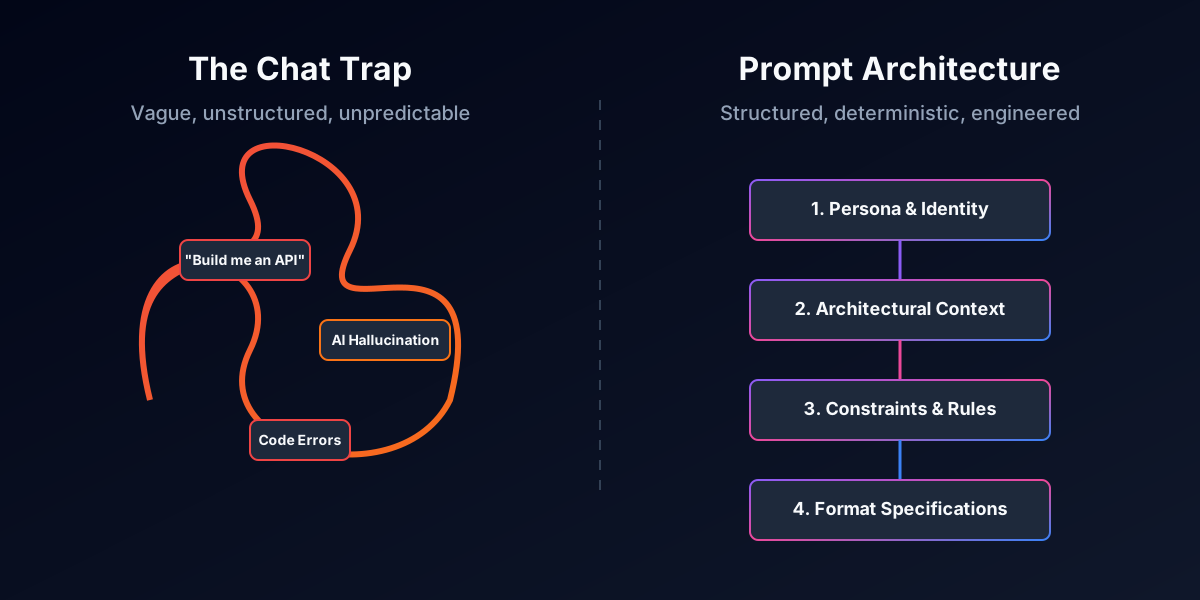
The "Chat Trap" occurs when we treat sophisticated AI models like simple conversational agents. Vague prompts such as "Build me an API" leave the model guessing your intent, your constraints, and your architectural stack. This ambiguity leads directly to context loss, codebase hallucinations, and brittle code that requires hours of human debugging.
Prompt Architecture, conversely, is the practice of treating prompts as deterministic, engineered interfaces. By providing strict structural boundaries, explicit context constraints, and deterministic data schemas, we ensure the AI output behaves like a predictable software function.
The Four Pillars of Prompt Architecture
To ascend from casual prompting to architectural prompting, you need a resilient framework. These are the four foundational pillars:
- Design & Modularity: Abstracting complex prompt logic into reusable, composable, and testable blocks. Don't write monolithic prompts; assemble them.
- Version Control: Prompts are code. Tracking changes to prompt instructions prevents regressions and ensures team-wide alignment.
- Validation & Schema: Forcing strict, predictable output formats (like
JSONorXML) bound by a rigidly typed schema. - Continuous Testing: Automatically evaluating iterations against expected "gold standard" outputs to catch systemic degradations before deployment.
The AI Prompt Architect Workflow
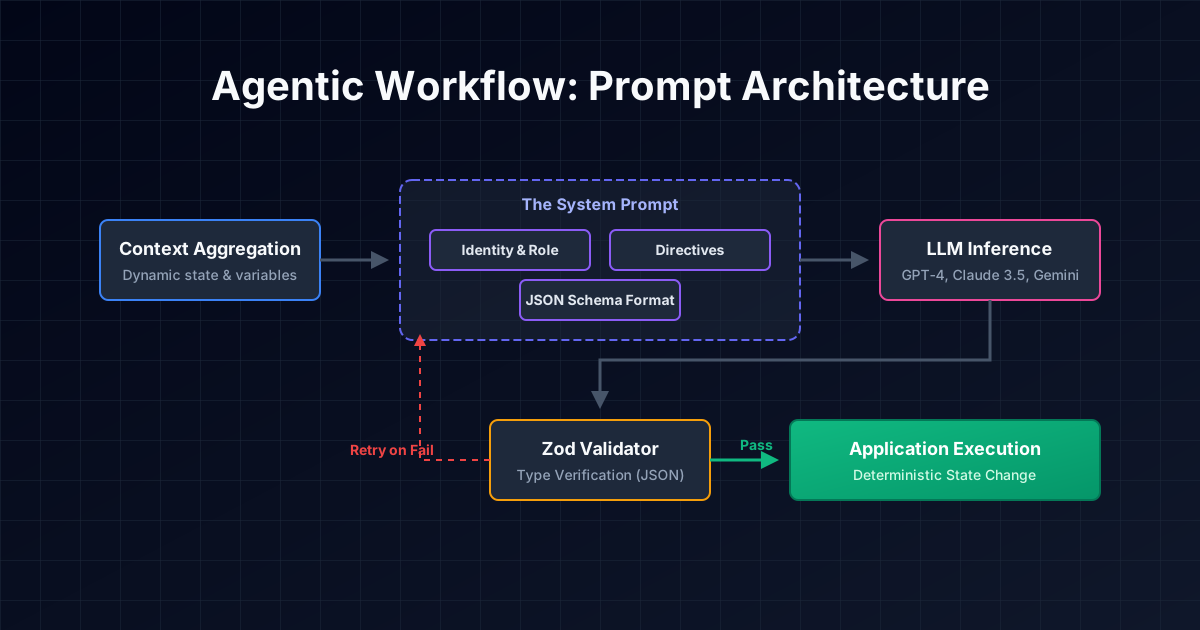
By assembling precise context, injecting rigid constraints, and using an LLM to generate structured outputs verified by an enforced validator (like Zod), we eliminate the unpredictability of AI. This creates an architecture that executes reliably in any production environment.
Stop Chatting. Start Architecting.
Ready to build systems that scale infinitely without the headache of hallucinations? Try AI Prompt Architect today and transform your generative AI workflows into rock-solid software pipelines.
Get the Prompt Engineering Playbook
Join 5,000+ developers receiving our weekly deep-dives on structured outputs, RAG optimisation, and advanced AI agent prompting.
Frequently Asked Questions
What is the Chat Trap?▼
The Chat Trap is the methodology of interacting with LLMs strictly through conversational interfaces, utilizing short, context-lacking prompts which ultimately yield unpredictable, hallucinated results.
What are the 4 pillars of Prompt Architecture?▼
The four pillars are: 1) Design & Modularity, 2) Version Control, 3) Validation & Schema, and 4) Continuous Testing. Together, they treat prompts like robust software code.
How do I start Architecting Prompts?▼
Begin by breaking your prompt down into modular context blocks, establishing a strict JSON schema for the output, and defining clear "guardrails" for the LLM to follow.
The AI Prompt Architect Team
AuthorWe build the world's leading tools for deterministic Prompt Engineering, helping developers and enterprises master structured AI generation at scale.